


When it comes to asbestos materials, it’s important to understand how to manage the risks associated with them and the laws related to asbestos. This information helps you, as a construction professional, understand your responsibilities if you’re developing a condominium building and notice unstable asbestos. This guide explores the dangers of asbestos, steps to take when damaged asbestos material is found, and legal considerations for dealing with it.
What Is Asbestos?
Asbestos is a natural mineral fiber used in housing and building materials to improve insulation, soundproofing, and fireproofing. It can also be added to products to strengthen them. Several types of asbestos fibers may only be seen with a special type of microscope.
Where Is Asbestos Found in Condominiums?
Asbestos can be found in building products and certain insulation materials used in the home. They were mainly used in older products, such as:
- Walls and floors: Asbestos was used in cement sheets, millboard, and paper to improve insulation.
- Roofing and siding shingles: These materials may be made with asbestos cement.
- Furnaces and woodburning stoves: Some floors and walls around woodburning stoves include asbestos millboard, paper, or cement sheets for heat protection.
- Textured paint: While the use of paints with asbestos in them was banned in 1977, older houses may still have traces of the paint on walls and ceiling joints.
- Hot water and steam pipes: Older houses may include steam and hot water pipes coated in asbestos material or covered in an asbestos blanket or tape.
How Asbestos Becomes Dangerous
According to studies, breathing in large amounts of asbestos fibers can increase the risk of lung cancer. A person may also develop asbestosis, which is when fibrous tissue scars their lungs, or mesothelioma, which is a cancer of the lining of the abdominal cavity or chest.
People may breathe in these fibers while having construction work done on an older house or building. Risks from asbestos typically occur when those materials are cut, damaged, disturbed, scraped, or sanded. This means health risks are unlikely when the product or material is left undisturbed and is in good condition.
A person’s risk of lung cancer is increased if they smoke, although they’ll need to be exposed to asbestos for an extended period before they experience any symptoms. For example, an individual may only experience symptoms after 20-30 years of exposure.
Signs of Potential Asbestos Issues
Asbestos exposure may affect the lungs and lead to respiratory-related symptoms. In the case of mesothelioma in the abdominal lining, a person may experience other effects on the body. Some signs of potential asbestos-related health issues include:
- Pain
- Fever
- Fatigue
- Swelling
- Wheezing
- Bloody cough
- Nausea or vomiting
- Shortness of breath
- Persistent coughing
- Difficulty swallowing
- Abdominal distension
- Chest pain or tightness
Steps to Take If Asbestos Is Found
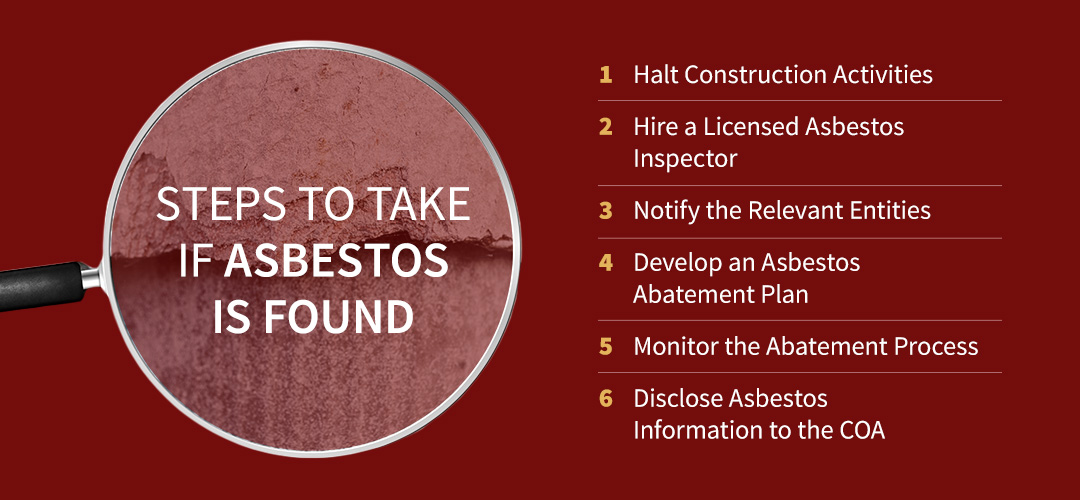
If you suspect the building you are renovating contains asbestos, there are a few steps you can take.
1. Halt Construction Activities
Immediately stop work in the area you suspect contains asbestos materials. Doing so may prevent further disturbance and fiber release. Restrict access to this area to prevent accidental exposure to workers and others on-site. In case you need the information later, document the location and condition of the suspected asbestos-containing materials and take pictures.
2. Hire a Licensed Asbestos Inspector
Massachusetts law requires that only certified asbestos inspectors conduct sampling and surveys. Have these samples tested for asbestos. If the asbestos tests confirm the material does contain asbestos, you’ll need to commission a comprehensive asbestos survey for the entire property to identify all areas that include this type of material.
3. Notify the Relevant Entities
File an Asbestos Notification Form with the Massachusetts Department of Environmental Protection (MassDEP) at least 10 working days before you begin the asbestos removal process. You must also notify the Massachusetts Department of Labor Standards and check with your local building departments whether there are any additional permits you’ll need for the asbestos abatement process.
If there are occupants in or near the building, consider informing them about the discovery and abatement process. Informing residents allows them to protect themselves, and it helps protect you from a potential asbestos lawsuit if they are affected.
4. Develop an Asbestos Abatement Plan
Hire licensed asbestos abatement contractors to perform the removal and work with them to develop a comprehensive abatement plan that complies with the Massachusetts Air Pollution Control Regulations. If you are looking at a large-scale project, it helps to hire a project designer to create detailed specifications for the abatement work.
5. Monitor the Abatement Process
Get an independent third-party air monitoring professional to conduct air monitoring before, after, and during the abatement process. Clearance air testing allows you to verify that airborne asbestos levels have been reduced to safe levels for reoccupation, minimizing asbestos exposure. Ensure all asbestos waste is properly disposed of according to Massachusetts regulations.
Keep detailed records of the abatement work and disposal activities. You can also request the final air clearance results, waste shipment records, and completion certificates after the asbestos-related activities are over.
6. Disclose Asbestos Information to the COA
The property’s condominium owners association (COA) is legally responsible for repairing and maintaining its common areas. Once the construction of the condominium building is finished, inform the COA about the asbestos abatement and any asbestos materials that still remain in the building.
Encourage them to update the COA documents with this information and inform potential buyers. You may also develop an operations and maintenance plan with them for the remaining asbestos.
Legal Considerations for Dealing With Unstable Asbestos
All uses of asbestos should conform to EPA regulations. While not all asbestos products were completely banned in the U.S., professionals and renovators should avoid using certain discontinued asbestos products.
Regarding asbestos surveys, an Asbestos Hazard Emergency Response Act (AHERA) certified building inspector should inspect the condominium and document the presence or absence of asbestos, including collecting and testing samples. Then they will provide a report based on their inspection of the condominium. Even if the condominium building doesn’t touch other buildings, the COA has a responsibility to comply with these NESHAP rules.
You should be careful to avoid the illegal removal of asbestos. Making choices like not hiring an accredited asbestos professional or not informing the condominium association may have legal consequences. These actions may also result in asbestos poisoning or asbestos-related injuries to others in the community, meaning they could sue you for damages related to medical costs, pain and suffering, lost wages, and emotional distress.
If you are a building developer who has discovered unstable asbestos, it may help to learn more about your responsibilities based on your unique development project circumstances. It is helpful to speak with a knowledgeable lawyer at Calabrese Law Associates who can help you understand how asbestos-related laws connect to your situation.
Why Trust Calabrese Law Associates?
Were you working on a condo development project when you discovered the area potentially contains asbestos materials? Our attorneys at Calabrese Law Associates may be able to assist you. Calabrese Law Associates is a law firm in the Greater Boston Area with various practice areas in construction law to help building developers and construction professionals manage construction matters. Benefits of working with us include:
- Comprehensive industry knowledge: Our attorneys are well-versed in the latest Massachusetts construction laws and industry insights. This information allows them to provide clients with effective legal advice and industry-leading legal representation.
- Tailored legal advice: Our lawyers take the time to listen to our clients’ unique situations and create tailored solutions to help them improve construction business practices and protect their interests. We also assist with negotiating construction and design contracts and approvals.
- Transparency: Because we value trust, we provide realistic legal advice based on your situation and maintain honesty about the possible outcomes of your case.
Learn More About Asbestos-Related Laws From Calabrese Law Associates
If you want to understand your responsibilities regarding unstable asbestos in more detail, our skilled lawyers at Calabrese Law Associates can listen to your story. We work to efficiently and effectively advise clients to contribute to a fair result. To learn more, contact a knowledgeable attorney today.
This publication and its contents are not to be construed as legal advice nor a recommendation to you as to how to proceed. Please consult with a local licensed attorney directly before taking any action that could have legal consequences. This publication and its content do not create an attorney-client relationship and are being provided for general informational purposes only.
Attorney Advertising. Prior results do not guarantee a similar outcome.
Linked Sources:
-
- https://www.calalaw.com/blog/renovating-a-condo/
- https://www.cpsc.gov/safety-education/safety-guides/home/asbestos-home
- https://www.mass.gov/info-details/asbestos-discipline-descriptions
- https://www.mass.gov/guides/massdep-asbestos-construction-demolition-notifications
- https://www.epa.gov/newsreleases/biden-harris-administration-finalizes-ban-ongoing-uses-asbestos-protect-people-cancer
- https://www.epa.gov/asbestos/overview-asbestos-national-emission-standards-hazardous-air-pollutants-neshap
- https://www.epa.gov/enforcement/criminal-provisions-clean-air-act
- https://www.calalaw.com/contact/
- https://www.calalaw.com/practice-areas/construction-law/