


Parking issues and disputes are some of the most common challenges property owners encounter, especially when the property is in a bustling city like Boston. It seems like there are never enough spaces to accommodate every car on the road, which is why designated parking space is such a hot commodity for potential tenants.
As a property manager, it’s important that you understand all the regulations you may be subjected to, and even more essential that you know what to do if someone violates parking rules. Calabrese Law Associates has more than a decade of experience in navigating Boston parking rules and issues — here’s the information you need to know.
Get Assistance with a Parking Dispute Now
Condo Parking Rules and Regulations
It can be easy to overlook parking and focus on maintaining the rest of your property, but even small disputes between tenants can escalate and leave the door open to you becoming liable. It’s best to instill strict parking regulations from the start and hold your tenants accountable. There are a few ways you can assign tenants parking spots:
- General common elements: These spots are open to certain people, such as tenants or co-owners. There should be enough spots for everyone to park, but individual spots are not assigned by name.
- Limited common elements: Similarly, limited common elements are open to an even smaller subsection of people. For example, a parking garage may allocate spots on certain levels for people working in specific adjacent buildings.
- Appurtenant parking spots: Appurtenant parking spots are assigned by name or tenant — each car owner in a specific office or residence will have their own spot to park in, regardless of how full the rest of the lot is.
Addressing Common Condo Parking Issues
Whether you assign parking spots to specific people or groups, there are a few considerations you should keep in mind as you establish parking rules. Ask yourself these questions if they are applicable to your situation:
- Is parking assigned or first-come, first-served?
- Are there time restrictions or costs associated with parking in certain areas?
- Are accessible spots available according to local and federal regulations?
- Are commercial and alternative vehicles (buses, boats, trailers, RVs, off-road vehicles) allowed to park here?
- Are unacceptable vehicles clearly defined?
- What are the rules for guest parking? Are there spaces specifically for visitors?
- Is there adequate signage detailing all parking rules?
Can a Condo Parking Spot be Sold or Rented?
Whether a condo parking spot may be sold or used by someone other than the owner or tenant of a unit to whom the space is assigned depends on the condominium’s declaration documents. Most condominium owners don’t legally own their parking spots. Instead, these parking spaces are assigned to particular units, giving the unit owner many of the rights related to ownership, such as preventing other drivers from parking in their space.
To reallocate limited common elements, such as parking spaces, specific requirements must be followed according to the condominium declaration. In some situations, unit owners may be required to get approval from their respective mortgage lenders before a transfer can be effective.
Enforcement of Condo Parking Violations
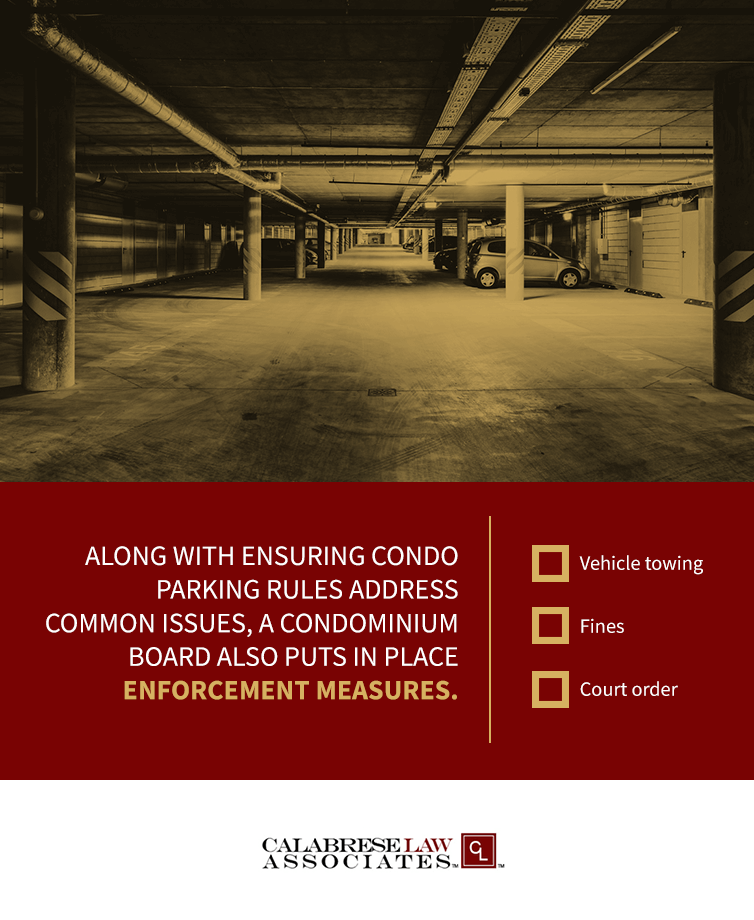
No matter how clear you are with your parking rules, there is always the chance someone will choose not to follow them. Your condominium board may implement repercussions such as:
- Fines: The first notice may be in the form of a parking ticket or another type of fine.
- Vehicle towing: Improper parking can also result in the vehicle being towed, leaving the vehicle owner responsible for the fines and cost of towing.
- Court orders: If someone continues to ignore parking directives, they may be subject to legal action, such as a court order, and further incidents may cause them to be held in contempt.
Why Trust Calabrese Law Associates?
At Calabrese Law Associates, we know how to navigate condominium law, parking disputes, appeals, and related concerns. With more than a decade of local experience, we can help you understand any parking-related concerns in and around your condo. When you need to take action, we will be there to support you and deliver the step-by-step instructions you need to achieve a favorable outcome.

Address Condo Parking Disputes With Calabrese Law Associates
Understanding local condo parking rules is an excellent first step to avoiding disputes, but accidents happen. If you find yourself in the midst of a parking issue, you may need legal support. Connect with our team to learn more about what you can do in your unique situation.
This publication and its contents are not to be construed as legal advice nor a recommendation to you as to how to proceed. Please consult with a local licensed attorney directly before taking any action that could have legal consequences. This publication and its content do not create an attorney-client relationship and are being provided for general informational purposes only.
Attorney Advertising. Prior results do not guarantee a similar outcome.